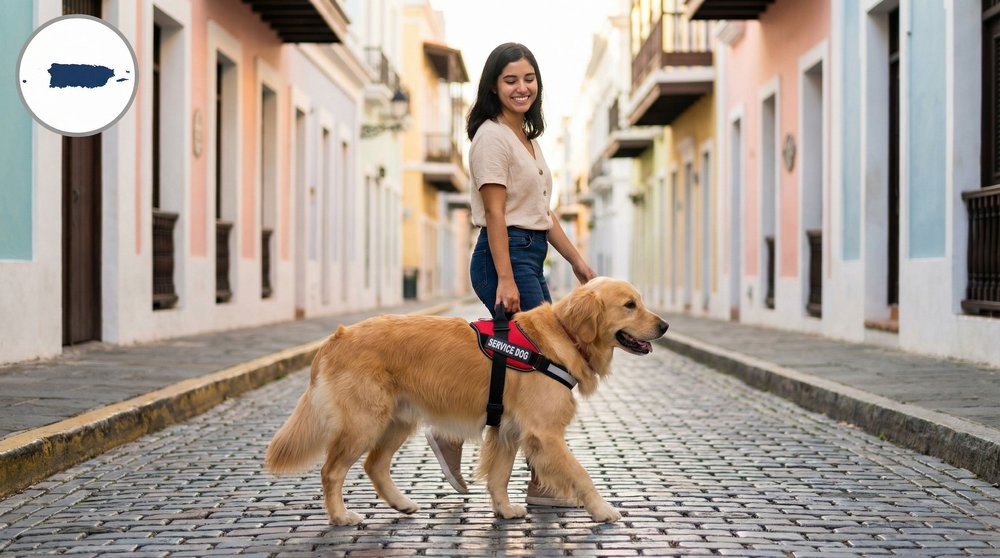
Service dogs offer critical assistance beyond companionship. These highly-trained companions help individuals manage daily tasks that would otherwise be overwhelming, particularly for those with physical limitations and mental health conditions.
Are Dogs the Only Type of Service Animal?
The Americans with Disabilities Act recognizes only miniature horses and dogs as official service animals, though dogs remain most common. Despite some local breed bans, federal law exempts service dogs from breed restrictions. The ADA permits any domesticated dog breed to serve as a service dog following mandatory training.
Top 8 Breeds for Service Dogs
Different service roles require different characteristics. Mobility assistance demands vary significantly from psychiatric support needs.
1. Golden or Labrador Retriever
Retrievers excel as both mobility and psychiatric service dogs. Their loving nature, trainability, and strong handler bonds make them ideal for physical and emotional support tasks.
2. German Shepherd
These intelligent, loyal dogs serve effectively as mobility assistants, seeing-eye dogs, and diabetic alert dogs. Their keen sense of smell enables blood sugar monitoring.
3. Standard Poodle
Intelligent and trainable, poodles handle physical tasks excellently. Their hypoallergenic coat benefits individuals with allergies.
4. Pomeranian
Small but attentive, Pomeranians excel as psychiatric service dogs, providing emotional support and assistance with anxiety disorders.
5. Boxer
Friendly and gentle, boxers navigate crowds effectively, making them suitable for PTSD, anxiety, and households with children.
6. Border Collie
Among the smartest breeds, Border Collies handle complex tasks but require significant daily exercise and mental stimulation.
7. Bernese Mountain Dog
Large, friendly, and eager to please, these dogs manage complex tasks and bond deeply with handlers, serving both mobility and psychiatric roles.
8. Cavalier King Charles Spaniel
Excellent for PTSD, anxiety, OCD, and depression, Cavaliers provide comfort without excessive energy demands.
Final Thoughts
No breed is universally superior for service work. Rather, different breeds possess distinct skillsets suited to specific assistance needs. Understanding these differences helps match the right dog to individual requirements.