Last Updated: February 2026
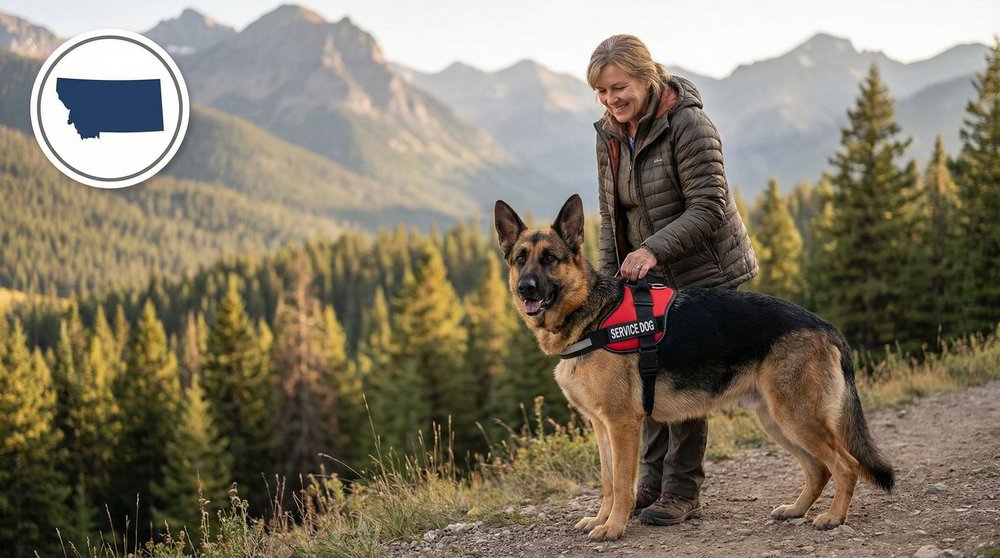
Montana protects service dog handlers through a combination of federal ADA coverage and detailed state statutes (MCA §§ 49-4-211 through 49-4-222). The state is notable for its 20-foot legibility SDIT identification requirement (one of the most specific in the country), a written warning prerequisite before fraud charges can be filed, graduated fraud fines ($50 for first offense up to $1,000 for third), and mandatory restitution for harming service animals.
Whether you’re a current service dog handler or training your own service dog in Big Sky Country, this guide covers everything you need to know about your rights and protections under Montana law.
Federal ADA Protections in Montana
The Americans with Disabilities Act (ADA) applies fully in Montana. Under the ADA (42 U.S.C. §§ 12101–12213), a service animal is defined as a dog that is individually trained to do work or perform tasks for the benefit of an individual with a disability.
Examples of tasks include:
- Guiding a person who is blind
- Alerting a person who is deaf to sounds
- Pulling a wheelchair
- Alerting and protecting a person during a seizure
- Reminding a person with mental illness to take medication
- Calming a person with PTSD during an anxiety attack
- Interrupting self-harm behaviors
Important: Emotional support animals, comfort animals, and therapy animals are not considered service animals under the ADA because they haven’t been trained to perform a specific task.
Montana Service Dog Statutes
MCA § 49-4-214 — Public Access Rights
Every person with a disability who uses a service animal has the right to be accompanied by that animal in all places of public accommodation, including:
- Restaurants and hotels
- Retail stores and shopping centers
- Public transportation
- Educational institutions
- Government buildings
- Any other place open to the general public
No additional fee or deposit may be charged for the service animal. The handler is liable for any damage caused by the animal.
White Cane Law (MCA § 49-4-211)
Montana’s White Cane Law establishes the right of blind, visually impaired, deaf, and hard-of-hearing persons to use guide dogs and hearing dogs. Drivers must yield the right-of-way to pedestrians using white canes or accompanied by guide dogs at intersections and crosswalks.
Service Dogs in Training (SDITs)
Montana grants public access rights to service dogs in training with a unique identification requirement.
20-Foot Legibility Identification Requirement
Under Montana law, an SDIT must wear identification that is legible from at least 20 feet away. This is one of the most specific SDIT identification requirements in the country. The identification must clearly indicate that the dog is a service animal in training.
When properly identified, the SDIT and its trainer have the same right of access to public places as a person with a disability using a fully trained service animal.
The Two-Question Rule
When it’s not obvious what service a dog provides, businesses may ask only two questions:
- “Is this a service animal required because of a disability?”
- “What work or task has the dog been trained to perform?”
Staff cannot:
- Ask about the nature or extent of the person’s disability
- Require documentation, certification, ID cards, or special vests
- Ask the dog to demonstrate its task
- Charge extra fees or surcharges for the service dog
Housing Rights
Federal Fair Housing Act (FHA)
The FHA (42 U.S.C. §§ 3601–3619) requires landlords to make reasonable accommodations for assistance animals, including service dogs, even in “no pets” housing. No pet deposits or fees may be charged.
Montana State Housing Protections
Montana law prohibits discrimination in housing based on disability under the Montana Human Rights Act (MCA Title 49, Chapter 2). The Montana Human Rights Bureau investigates housing discrimination complaints. Landlords must make reasonable accommodations for tenants with disabilities who use service animals.
Employment Protections
Federal ADA
Title I of the federal ADA covers employers with 15 or more employees and requires reasonable accommodations for employees with disabilities, which can include allowing a service dog in the workplace.
Montana Human Rights Act
The Montana Human Rights Act covers employers with one or more employees, extending protections significantly beyond the federal ADA’s 15-employee threshold. This means virtually all Montana employers must accommodate service dogs as a reasonable accommodation.
Registration and Identification Accessories
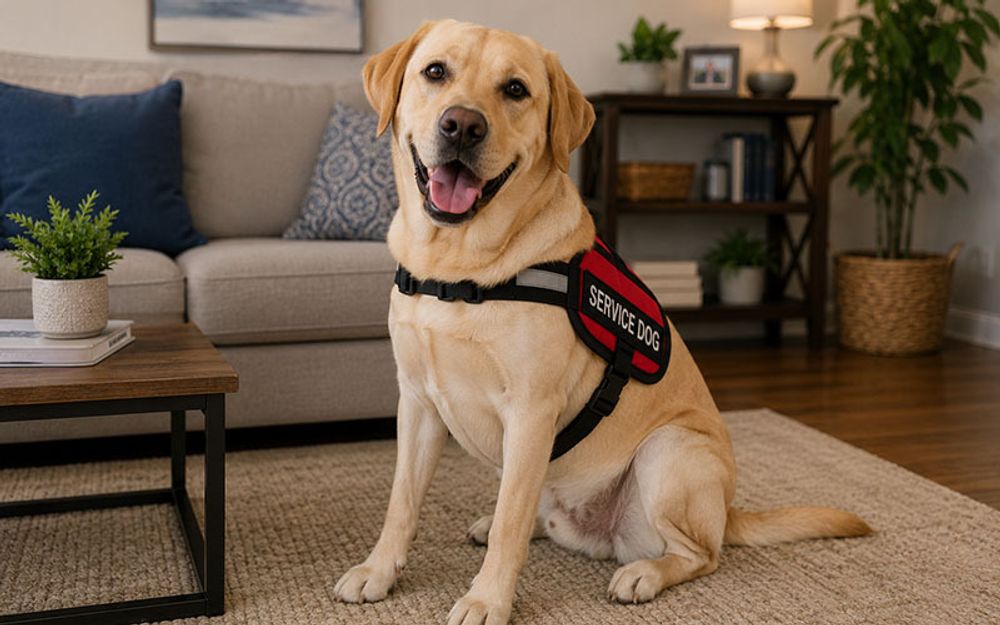
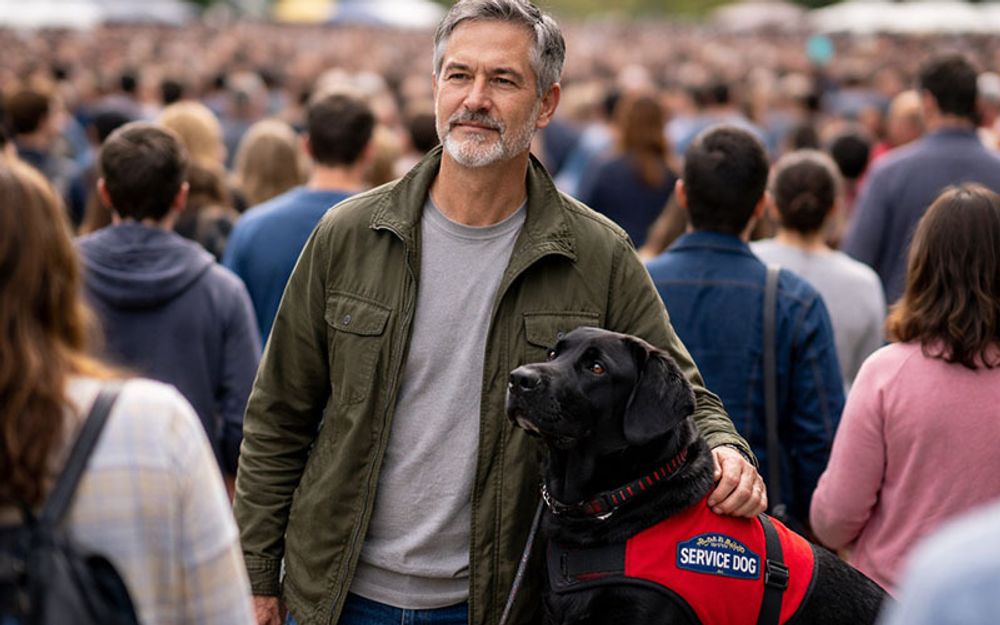
While registration, ID cards, vests, leashes, tags, and other identification accessories are not required or endorsed by the ADA, they serve a practical purpose — much like a uniform. Outfitting your service dog with identifiable gear allows people to recognize them as a working animal from a distance, reduces hassle and questioning in public, and helps create a smoother experience for both handlers and businesses.
Think of it as a courtesy that benefits everyone. When your service dog is wearing a clearly marked vest or harness, store employees and other patrons are less likely to approach with questions or attempt to pet your dog. This means fewer interruptions while your service dog is working and a more seamless experience in restaurants, stores, and other public places.
Common service dog accessories include:
- Service dog vests and harnesses — clearly identify your dog as a working animal
- Service dog leashes — printed with “Service Dog” for added visibility
- ID cards and tags — provide quick reference for your dog’s role
- Patch sets — allow you to customize your dog’s vest with relevant messages
Registration is voluntary and carries no legal weight, but if you want an ID card and gear to hand, you can register your service dog and have it shipped anywhere in Montana.
Penalties and Enforcement
Service Animal Fraud — Written Warning Prerequisite
Montana takes a graduated, education-first approach to service animal fraud. Before criminal fraud charges can be filed, the person must first receive a written warning from a law enforcement officer or business owner explaining that misrepresenting a pet as a service animal is illegal. Only after receiving this written warning can subsequent violations result in criminal penalties.
Graduated Fraud Fines
Montana uses a tiered fine structure for service animal misrepresentation:
| Offense | Fine |
|---|---|
| First offense (after written warning) | $50 |
| Second offense | $75–$200 |
| Third or subsequent offense | $100–$1,000 |
This graduated approach prioritizes education over punishment, giving first-time offenders a chance to correct their behavior before facing significant fines.
Harming a Service Animal (MCA § 45-8-229)
Montana penalizes anyone who intentionally injures, harasses, or kills a service animal:
- Criminal charges including misdemeanor or felony depending on severity
- Mandatory restitution covering:
- Veterinary expenses
- Replacement or retraining costs
- Lost income of the handler
- Temporary replacement assistance
Denial of Access
Interfering with, denying, or obstructing the rights of a person with a disability to be accompanied by a service animal is a violation of Montana law and may result in fines and civil liability.
Training Requirements
Under the federal ADA — which applies in Montana — service dogs do not need to be trained by a professional or certified organization. Owner-training (self-training) is fully permitted.
There is no national or state registry, certification, or licensing requirement. A service dog must:
- Be trained to perform at least one specific task related to the handler’s disability
- Be under the handler’s control at all times
- Be housebroken
- Not pose a direct threat to health or safety
Note: While fully trained service dogs don’t need identification, Montana’s SDIT 20-foot legibility requirement does apply to dogs still in training.
Air Travel
Montana follows federal law for air travel. As of January 2021, the U.S. Department of Transportation’s final rule (14 C.F.R. Part 382) recognizes only trained service dogs. Key rules:
- Airlines may require handlers to complete a DOT Service Animal Air Transportation Form
- Airlines cannot ban specific breeds of service dogs
- Airlines may limit passengers to two service dogs
- The dog must fit within the handler’s foot space
- Service dogs travel in the cabin at no charge
- Emotional support animals are no longer covered — they’re treated as pets
Key Takeaways
- SDITs must wear identification legible from 20 feet — one of the most specific SDIT requirements in any state.
- A written warning must precede fraud charges — Montana’s education-first approach gives offenders a chance to correct behavior.
- Fraud fines are graduated — $50 first offense, up to $1,000 for third or subsequent offenses.
- Mandatory restitution protects handlers — courts must order convicted persons to cover veterinary bills, replacement costs, and lost income.
- Montana Human Rights Act covers all employers — one or more employees, significantly broader than the federal ADA.
- Full public access rights for service dogs — all places open to the public, with no additional fees.
- No certification or registration is legally required — owner-training is fully permitted under the ADA.
This article is for informational purposes only and does not constitute legal advice. Laws are subject to change — consult a qualified attorney for specific legal questions.