Moving with a Service Dog or ESA: Your Step-by-Step Guide
Moving is considered one of the biggest stressors in life as it involves packing, address changing, settling in with a mover, and juggling a dozen things at once. However, for a handler, there is an extra layer of anxiety: Will my new landlord let me keep my dog? Will my papers be questioned? If I am crossing state lines, do I require a new letter?
Here is what you need to remember: You have a working partner, you have your certified documents, and the rest is just paperwork. This guide will walk you through every step of the way, from introducing your dog to a new property manager to helping them adjust to their new environment seamlessly.
Educating Your New Landlord
When you decide to tell your landlord about an assistance animal, it is a great idea to disclose during the application stage—before signing the contract, not later.
For Emotional Support Dogs
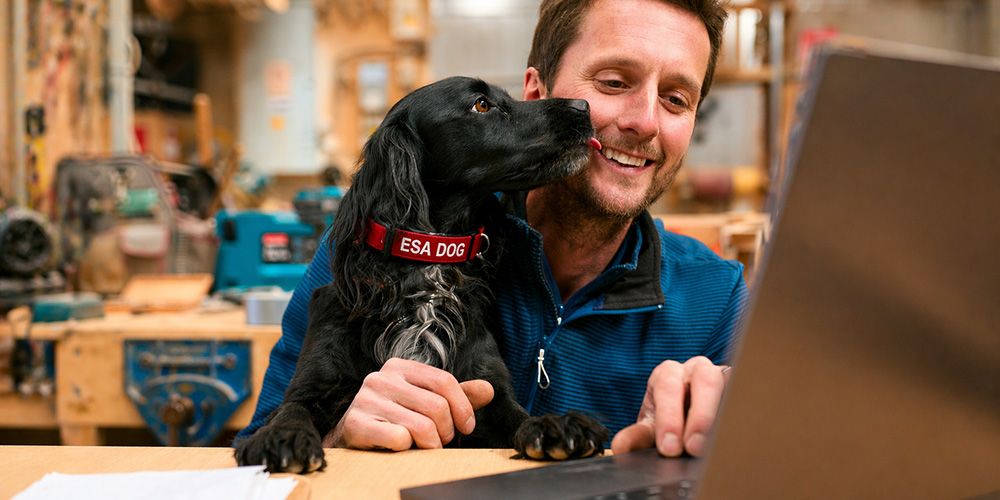
If you have an Emotional Support Animal, your primary protection comes from the Fair Housing Act, which requires landlords to make reasonable accommodations for tenants. Show your valid ESA letter nicely and confidently. Always check whether your current ESA letter complies with the telehealth laws of your new state.
For example, California requires a therapeutic relationship to be established for 30 days before an ESA letter is issued. If your letter was issued under the laws of a different state, you might need to be evaluated again. USA Service Dogs offers state-specific compliance and new letters here.
For Service Dogs
For Service Dog handlers, it's important to remember that residential housing is governed by the Fair Housing Act (FHA), not the ADA. Many landlords are not well-informed about this distinction, and no one is comfortable starting a relationship with complicated legal arguments.
While it is important to note that physical IDs and certificates are not legally required by the FHA, proactively presenting your USA Service Dogs credentials does something a verbal explanation cannot: it instantly establishes professionalism, visually communicates that your dog is a trained working animal, and removes friction before it starts.
A Note on Pet Fees and Breed Restrictions
Because Service Dogs and ESAs are treated as assistance animals rather than pets, a housing provider that approves one as a reasonable accommodation cannot then charge a pet deposit or monthly pet rent for it, and should not apply a blanket breed or weight rule to it. Make the accommodation request in writing early, so this is settled before you sign. You remain responsible for any damage your dog causes.
Navigating the Meet and Greet
Many landlords will request a meet-and-greet with your dog before approving your application. Because many property owners don't fully understand the regulations, assistance animals are often subjected to this more frequently than standard pets. Do not treat this as an audition. Treat it as a professional courtesy—an opportunity to start the relationship on a solid footing and put any concerns to rest before they become obstacles.
A few things that make a real difference:
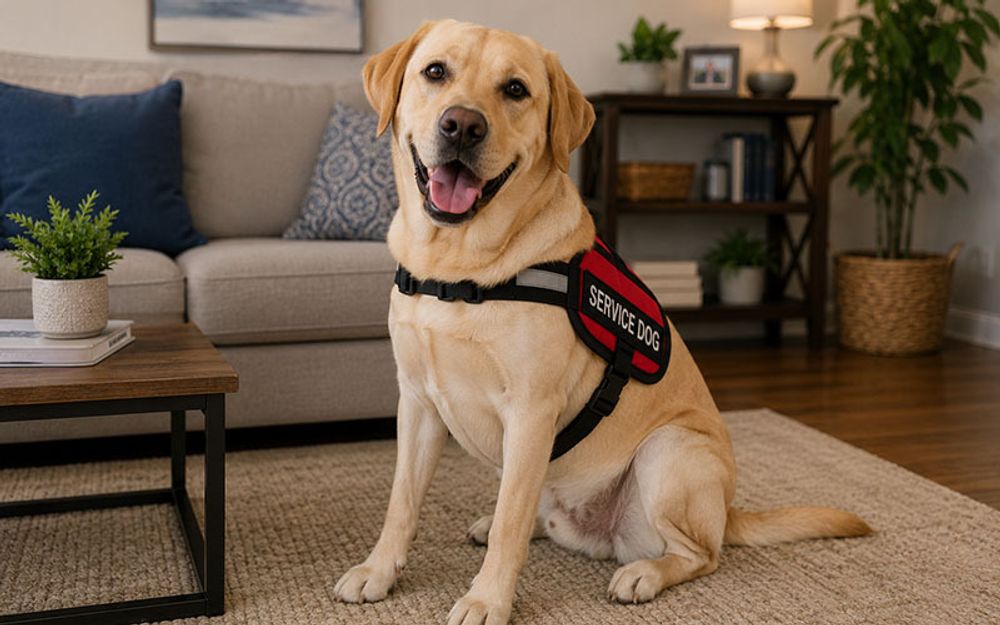
- Dress for the job: Make sure your dog wears their USA Service Dogs vest or ID tag. That simple visual cue conveys that you have a working dog without saying a word, establishing a boundary that a standard collar and lead just can't.
- Drain their energy beforehand: Before heading to the meeting, take your dog for a long walk to wear them out. A calm, relaxed dog is your best advocate, no matter how highly trained they are.
- Stay composed if questions come up: Some landlords may ask questions that seem intrusive. Keep calm, be polite, and rely on your paperwork to do the talking. Proactively offering your ESA letter or Service Dog ID card is the quickest way to answer their questions smoothly.
Preventing Behavioral Regression
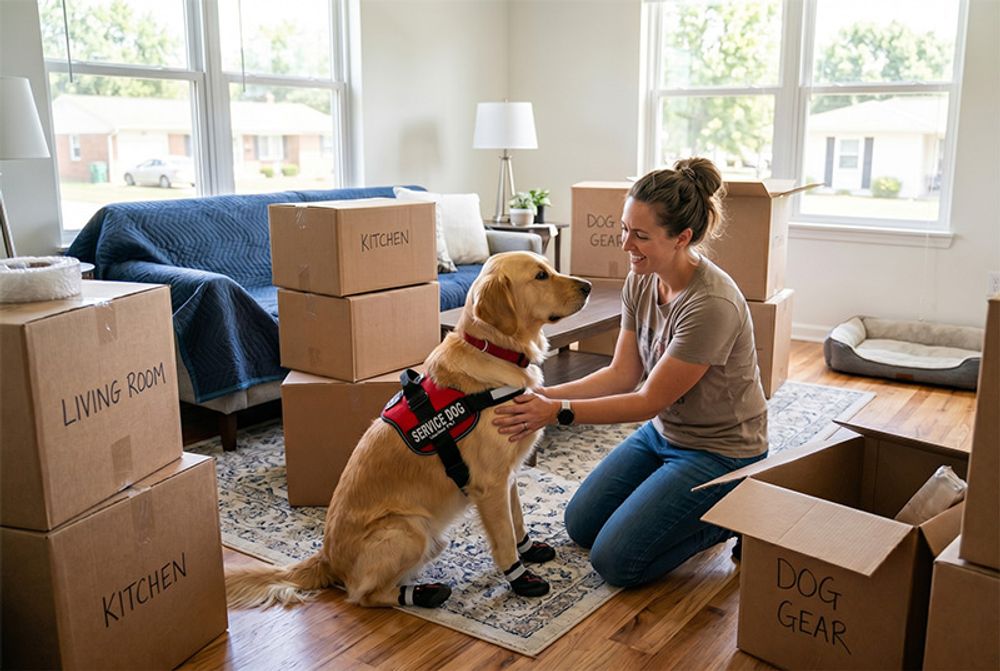
Dogs do not understand the concept of moving; to your dog, their entire familiar territory just disappeared overnight. That disorientation can temporarily show up as potty accidents, increased anxiety, or a dip in their tasking reliability, even in dogs with years of solid training.
The good news is that a few deliberate choices on move-in day can prevent most of these issues without requiring extra training or special equipment.
- Don't wash their bedding before the move: Their bed, blankets, and favorite toys contain the familiar scent of your old home. Keeping that scent intact offers a powerful sense of comfort and security in a brand-new place.
- Keep the schedule exactly the same: The timings of meals, walks, and potty breaks should follow your exact same pattern as before. Routine is the most efficient way to let your dog know that their world is still safe and unchanged.
- Introduce the relief spot first: Upon arrival at the new place, make your dog's outdoor relief area your absolute first stop so they instantly know where the designated bathroom is.
Starting the Next Chapter Right
With clear communication beforehand and a steady routine, your dog will adjust to the new place much quicker than you might think. Dogs are incredibly resilient, and they trust you to show them the way. Right now, your calm guidance is the absolute best tool you have to help them settle in. Before the boxes are packed and the moving vans pull up, take a few minutes to review your documentation. Moving is a major milestone, but by being proactive, you and your working partner can handle the transition with total confidence. Part of that preparation means ensuring your paperwork and gear are fully up to date for your new landlord.
For emotional support dogs, If you are moving across state lines, you may need to get a new ESA letter written by a mental health professional licensed in your new state. Even if you are staying local, remember that ESA letters generally expire after one year, so you may just need a quick ESA letter renewal to keep your housing protection active.
For Service Dog handlers, while physical IDs are never legally required by the FHA, having a fresh Service Dog ID kit on hand adds an extra layer of professionalism and peace of mind when meeting your new property manager.
Whether you need a state-specific evaluation, a simple renewal, or updated accessories, USA Service Dogs has you covered. Get your updated documentation today so you can start this next chapter safely, professionally, and without a single gap in your housing paperwork!