Last Updated: February 2026
Pennsylvania has notable ESA protections and fraud penalties under Act 118 of 2018 (Assistance and Service Animal Integrity Act, 68 P.S. §§ 405.1–405.7). Act 118 explicitly defines “assistance animal” to include ESAs, requires that documentation be “reliable and based on direct knowledge” of the disability, imposes criminal penalties for ESA fraud (misdemeanor up to 1 year and $2,500), and provides landlord liability immunity for permitted ESAs. Housing complaints are filed with the Pennsylvania Human Relations Commission (PHRC) within 180 days.
Whether you’re a current ESA owner or considering getting an ESA letter, this guide covers everything you need to know about your rights and responsibilities in Pennsylvania.
How ESAs Differ from Service Dogs
Understanding this distinction is critical, because it determines what rights you have:
| Service Dogs | Emotional Support Animals | |
|---|---|---|
| Training | Individually trained to perform specific tasks | No training required |
| Species | Dogs (under ADA); broader under PHRA | Any species (under Act 118 + FHA) |
| Public Access | Full access to all public places | No public access rights |
| Housing | Protected (ADA + FHA + PHRA) | Protected (FHA + PHRA + Act 118) |
| Air Travel | Cabin access at no charge | Treated as pets (fees apply) |
| Federal Law | ADA + FHA | FHA only (not ADA) |
| PA Law | 18 Pa.C.S. § 7325 + PHRA | Act 118 + PHRA § 955(h) |
An ESA provides emotional, cognitive, or other support through companionship and presence — they don’t need specialized training. A psychiatric service dog, by contrast, is trained to perform specific tasks related to a psychiatric disability and has full public access rights.
Act 118 of 2018: Pennsylvania’s ESA Framework
Act 118 is significant because it explicitly recognizes ESAs in state law. It defines an “assistance animal” as “an animal, other than a service animal, that qualifies as a reasonable accommodation under the Fair Housing Act… and includes an emotional support animal when the animal qualifies as a reasonable accommodation.”
Key provisions:
- ESAs are explicitly recognized as a category of assistance animal
- ESAs can be any species — not limited to dogs
- Specific documentation and verification standards are established
- Criminal penalties for ESA fraud
- Landlord immunity from liability for permitted ESAs
Documentation Standards: “Reliable and Based on Direct Knowledge”
Act 118 establishes documentation standards for ESA accommodation requests. Under Section 3, any documentation proving disability and need for an assistance animal must:
- Be in writing
- Be “reliable and based on direct knowledge” of the person’s disability and disability-related need
- Describe the person’s disability-related need for the animal
The “reliable and based on direct knowledge” standard is notable but not as strict as some states’ anti-letter-mill provisions. Unlike states such as South Dakota or Oklahoma — which explicitly bar providers who operate solely to issue ESA certifications or presume purchased documentation is fraudulent — Pennsylvania’s language is more general. It does not define a minimum provider-patient relationship period, does not explicitly ban online-only providers, and does not specifically target letter mills by name.
That said, a landlord could use this standard to question documentation that appears to lack a genuine provider-patient relationship. The “direct knowledge” language suggests the provider should have meaningful familiarity with the person’s condition — not just a one-time form submission.
Your Housing Rights
Housing is where ESA protections are strongest. Both federal and Pennsylvania law protect your right to live with your ESA.
Federal Fair Housing Act (FHA)
The FHA (42 U.S.C. §§ 3601–3619) requires housing providers to make reasonable accommodations for persons with disabilities, which includes allowing ESAs even in “no pets” housing. Under the FHA, ESAs are classified as “assistance animals” — not pets.
Pennsylvania State Housing Protections
The PHRA (43 P.S. § 955(h)) prohibits housing discrimination based on disability, including refusing reasonable accommodations. Act 118 adds the specific ESA documentation framework and fraud penalties.
What You’re Entitled To
- Keep an ESA in “no pets” housing
- Keep an ESA regardless of breed, size, or weight restrictions
- Pay no pet deposit, pet rent, or additional fees
- Keep an ESA in HOA-governed properties
- Keep an ESA in college/university housing
What Landlords Can and Cannot Do
Landlords CAN:
- Request written documentation of disability and disability-related need only when neither is readily apparent
- Require that documentation be “reliable and based on direct knowledge” of the disability
- Reject documentation that does not appear to be based on direct knowledge of the disability
- Deny the accommodation if the animal poses a direct threat to health or safety
- Deny the accommodation if the animal would cause substantial physical damage
- Hold you financially responsible for damage caused by the ESA
Landlords CANNOT:
- Charge pet deposits, pet rent, or any fees for your ESA
- Require detailed medical records (only written documentation of disability and need)
- Require special certification, ID cards, or training documentation
- Impose breed, weight, or size restrictions on the ESA
- Deny housing because of a blanket “no pets” policy
- Retaliate against you for requesting an ESA accommodation
- Request documentation when the disability is readily apparent
Landlord Liability Immunity (Act 118 § 405.4)
Pennsylvania provides landlords and HOAs with statutory immunity from liability for injuries caused by a permitted ESA or service animal. This unique provision encourages landlords to comply with accommodation requests by reducing their legal risk. This protection is not found in federal law and is relatively rare among states.
ESA Letter Requirements
Who Can Write an ESA Letter
A valid ESA letter must come from a licensed healthcare provider whose documentation is reliable and based on direct knowledge of your disability. Qualifying professionals include:
- Licensed Physicians (MD/DO)
- Licensed Psychologists
- Licensed Clinical Social Workers
- Licensed Professional Counselors
- Psychiatrists
- Psychiatric Nurse Practitioners
What the Letter Must Confirm
- The documentation is reliable
- The provider has direct knowledge of your disability and disability-related need
- You have a disability as defined by the FHA
- The animal provides disability-related support
- Documentation must be in writing, reliable, and based on direct knowledge
What to Avoid
To ensure your documentation meets the “reliable and based on direct knowledge” standard, consider avoiding:
- Services where the provider has no familiarity with your condition
- Services that guarantee instant approval based solely on a brief questionnaire
- Any provider who issues a letter without any clinical evaluation of your disability
Public Access: What ESAs Cannot Do
ESAs have no public access rights in Pennsylvania. Only trained service dogs are permitted in public places under 18 Pa.C.S. § 7325 and the ADA. ESAs cannot enter:
- Restaurants, cafes, or bars
- Retail stores or shopping malls
- Hotels or motels
- Hospitals or medical offices
- Theaters or entertainment venues
- Government buildings
- Any other place of public accommodation
The only exception is tenant housing, which is governed by the FHA, PHRA, and Act 118.
Air Travel
Since January 2021, the U.S. Department of Transportation no longer requires airlines to accommodate ESAs in the cabin for free. All major U.S. airlines now treat ESAs as regular pets, meaning:
- Standard pet fees apply (typically $95–$200+ each way)
- Small ESAs may fly in an under-seat carrier as a pet
- Larger ESAs may need to travel in cargo
- Standard airline pet policies and restrictions apply
Psychiatric service dogs (trained to perform specific tasks related to a psychiatric disability) still have full air travel protections and can fly in the cabin at no charge.
Workplace Protections
Pennsylvania does not have a specific statute granting ESA workplace access rights. However, the PHRA covers employers with 4 or more employees and requires reasonable accommodations for employees with disabilities. An ESA request in the workplace would be evaluated on a case-by-case basis.
Registration and Identification Accessories
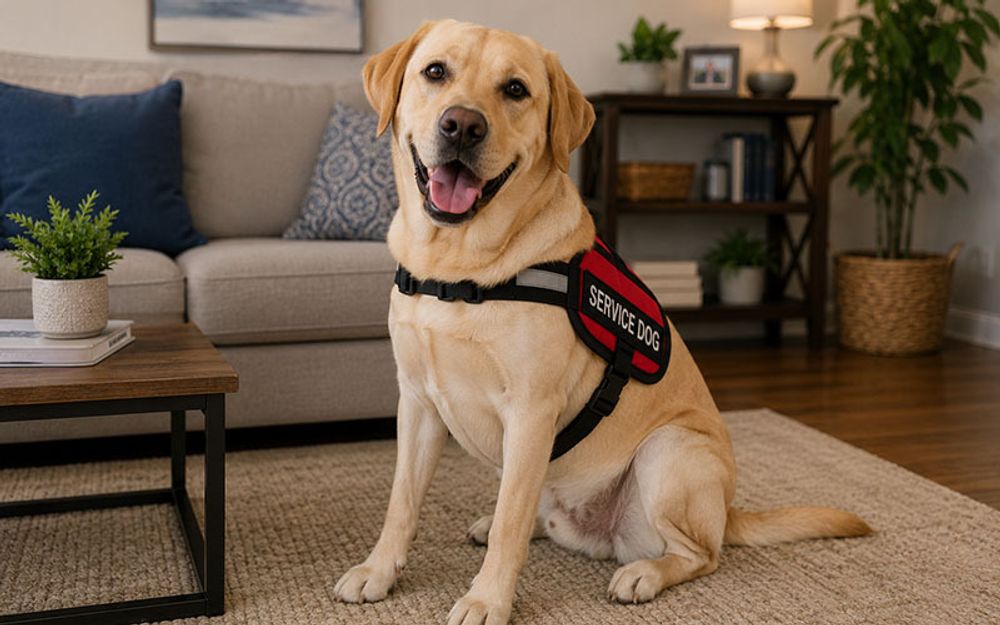
While registration, ID cards, vests, leashes, tags, and other identification accessories are not required by law, they serve a practical purpose — much like a uniform. Outfitting your emotional support animal with identifiable gear can reduce questions and hassle, especially in housing situations like moving in, walking through common areas, or when maintenance enters your unit.
Think of it as a courtesy that benefits everyone. When your ESA is wearing a clearly marked vest or harness, neighbors and property staff are less likely to confuse your ESA with a pet or question your right to have them. This creates a smoother experience for you and the people around you.
Common ESA accessories include:
- ESA vests and harnesses — clearly identify your animal as an emotional support animal
- ESA leashes — printed with “Emotional Support Animal” for visibility
- ID cards and tags — provide quick reference when needed
- Registration certificates — while not legally required, they can provide additional documentation
Registration is voluntary and carries no legal weight, but if you want an ID card and gear to hand, you can register your emotional support dog and have it shipped anywhere in Pennsylvania.
ESA Fraud Penalties
Pennsylvania has some of the most aggressive ESA fraud penalties in the nation under Act 118:
| Offense | Classification | Penalty |
|---|---|---|
| Misrepresenting a disability or need for an ESA | Misdemeanor of the 3rd degree | Up to 1 year imprisonment / $2,500 fine |
| Misrepresenting an animal as an ESA | Summary offense | Up to $1,000 fine |
| Creating or providing false ESA documentation | Summary offense | Up to $1,000 fine |
| Fitting a non-ESA with harness/vest/sign | Summary offense | Up to $1,000 fine |
Both offenses result in a criminal record. The misdemeanor charge for misrepresenting a disability is notably severe — reflecting Pennsylvania’s strong stance against disability fraud.
Filing a Complaint
If you believe your ESA housing rights have been violated, you have several options:
Pennsylvania Human Relations Commission (PHRC)
The PHRC investigates housing discrimination complaints under the PHRA. Complaints must be filed within 180 days of the alleged discriminatory act. If the complaint is disability-related, a Disability Information Release form must also be submitted.
U.S. Department of Housing and Urban Development (HUD)
You can also file a complaint with HUD within one year of the alleged discrimination. Filing with the PHRC automatically cross-files with HUD if the allegations fall under federal law.
Private Lawsuit
You may file a private lawsuit in state or federal court seeking injunctive relief, compensatory damages, and attorney’s fees.
Key Takeaways
- Act 118 explicitly recognizes ESAs in Pennsylvania law — defining them as a category of assistance animal qualifying for reasonable accommodation.
- Documentation must be “reliable and based on direct knowledge” — a general standard that gives landlords some basis to question dubious letters, though it is less specific than some states’ explicit anti-letter-mill statutes.
- ESA fraud carries criminal penalties — misrepresenting a disability is a misdemeanor (up to 1 year / $2,500).
- Landlords receive statutory immunity — Act 118 § 405.4 protects landlords from liability for injuries caused by permitted ESAs.
- Landlords cannot charge pet fees for ESAs — no deposits, pet rent, or surcharges are permitted.
- ESAs have no public access rights — only housing protections apply.
- File PHRC complaints within 180 days — or file with HUD within 1 year (cross-filing is automatic).
- Get your letter from a provider who knows your condition — documentation should reflect genuine familiarity with your disability to meet the “direct knowledge” standard.
This article is for informational purposes only and does not constitute legal advice. Laws are subject to change — consult a qualified attorney for specific legal questions.