Last Updated: March 2026
West Virginia’s ESA housing protections have undergone a major change. In February 2024, West Virginia repealed its state Fair Housing Act, leaving ESA owners relying primarily on the federal Fair Housing Act (FHA) for housing protections. The federal FHA still provides strong protections, but the repeal means there is no state-level fair housing enforcement agency for disability-related housing discrimination, and the federal Mrs. Murphy exemption (owner-occupied buildings with four or fewer units) now applies without any state supplement. West Virginia has no anti-letter-mill statute and no dedicated ESA fraud law.
Whether you’re a current ESA owner or considering getting an ESA letter, this guide covers everything you need to know about your rights and responsibilities in West Virginia.
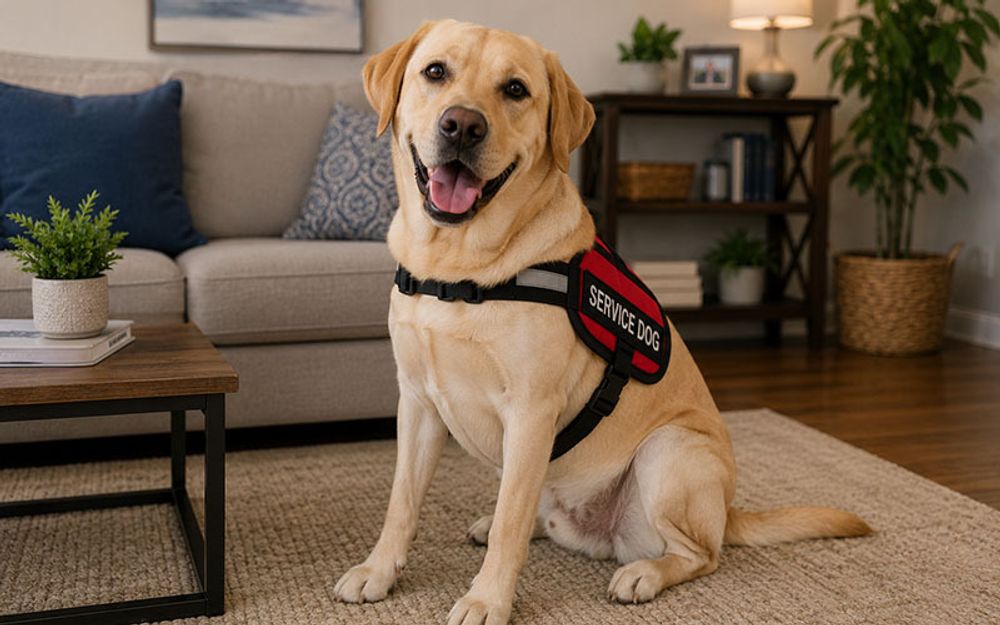
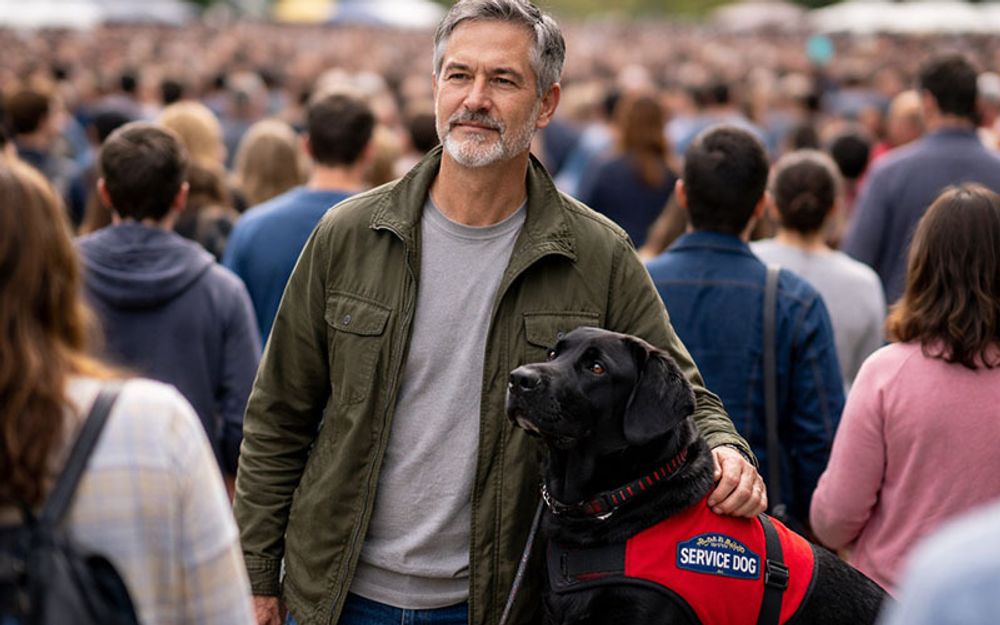
How ESAs Differ from Service Dogs
Understanding this distinction is critical, because it determines what rights you have:
| Service Dogs | Emotional Support Animals | |
|---|---|---|
| Training | Individually trained to perform specific tasks | No training required |
| Species | Dogs (under ADA) | Any domesticated animal |
| Public Access | Full access to all public places | No public access rights |
| Housing | Protected (ADA + federal FHA) | Protected (federal FHA only) |
| Air Travel | Cabin access at no charge | Treated as pets (fees apply) |
| Federal Law | ADA + FHA | FHA only (not ADA) |
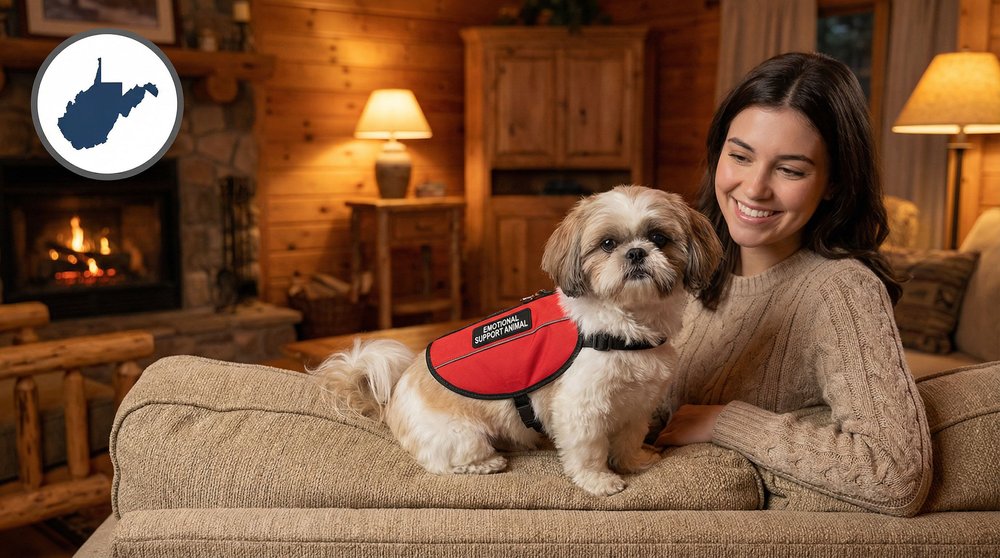
An ESA provides emotional, cognitive, or other support through companionship and presence — they don’t need specialized training. A psychiatric service dog, by contrast, is trained to perform specific tasks related to a psychiatric disability and has full public access rights.
Impact of the 2024 State Fair Housing Act Repeal
In February 2024, the West Virginia Legislature repealed the state’s Fair Housing Act. This is a significant change for ESA owners:
- No state-level fair housing enforcement — complaints can no longer be filed with a state agency for housing discrimination
- Federal FHA still applies — the repeal does not affect your federal fair housing rights
- Federal Mrs. Murphy exemption now applies without supplement — owner-occupied buildings with four or fewer units may be exempt from federal FHA requirements
- HUD complaints are the primary recourse — ESA owners must file with the federal HUD office or pursue private legal action
Your Housing Rights
Housing is where ESA protections are strongest. The federal Fair Housing Act protects your right to live with your ESA.
Federal Fair Housing Act (FHA)
The FHA (42 U.S.C. §§ 3601–3619) requires housing providers to make reasonable accommodations for persons with disabilities, which includes allowing ESAs even in “no pets” housing. Under the FHA, ESAs are classified as “assistance animals” — not pets.
What You’re Entitled To
- Keep an ESA in “no pets” housing
- Keep an ESA regardless of breed, size, or weight restrictions
- Pay no pet deposit, pet rent, or additional fees
- Keep an ESA in HOA-governed properties
- Keep an ESA in college/university housing
- An ESA can be any type of domesticated animal — not limited to dogs
- A person may need more than one ESA
Federal Exemptions (Now Apply Fully)
With the state Fair Housing Act repealed, the federal FHA exemptions apply without any state-level supplement:
- Owner-occupied buildings with four or fewer units (Mrs. Murphy exemption) may be exempt
- Single-family homes sold/rented without a broker may be exempt (under certain conditions)
- Religious organizations and private clubs may limit occupancy to members
What Landlords Can and Cannot Do
Landlords CAN:
- Request limited documentation when the disability or connection to the ESA is not visible or obvious
- Ask whether the person has a disability under the law and whether the ESA is needed to address the disability
- Deny the accommodation if the animal poses a direct threat to health or safety
- Deny if the animal causes significant property damage
- Deny if the accommodation would impose an undue financial or administrative burden
Landlords CANNOT:
- Charge pet deposits, pet rent, or any fees for your ESA
- Ask what the disability is or require private medical records
- Request documentation when the disability and need are apparent or already known
- Require special certification, ID cards, or training documentation
- Impose breed, weight, or size restrictions on the ESA
- Deny housing because of a blanket “no pets” policy
- Retaliate against you for requesting an ESA accommodation
ESA Letter Requirements
Who Can Write an ESA Letter
A valid ESA letter should come from a licensed healthcare professional who has a therapeutic relationship with you. Qualifying professionals include:
- Licensed Physicians (MD/DO)
- Licensed Psychologists
- Licensed Clinical Social Workers
- Licensed Professional Counselors
- Psychiatrists
- Psychiatric Nurse Practitioners
What the Letter Should Include
- The professional’s license type and number
- Confirmation of a disability as defined by the FHA
- Explanation of how the ESA alleviates symptoms of the disability
- Contact information for the provider
No Anti-Letter-Mill Statute
West Virginia has not enacted anti-letter-mill legislation. However, landlords applying HUD’s 2020 guidance (FHEO-2020-01) may scrutinize letters from providers with no prior therapeutic relationship. Red flags include:
- Letters from providers with no prior therapeutic relationship
- Letters obtained through online-only services with no meaningful evaluation
- Services marketing ESA vests, ID tags, or “certification/registration”
- Services that promise instant approval
If you don't already have a letter, you can request an ESA letter evaluation. You'll be connected with a mental health professional licensed in West Virginia, who decides whether an emotional support animal is appropriate for you.
Public Access: What ESAs Cannot Do
ESAs have no public access rights in West Virginia. Only trained service dogs are permitted in public places under WV Code 5-15-4. ESAs cannot enter:
- Restaurants, cafes, or bars
- Retail stores or shopping malls
- Hotels or motels
- Hospitals or medical offices
- Theaters or entertainment venues
- Government buildings
- Any other place of public accommodation
The only exception is housing, which is governed by the federal FHA.
Air Travel
Since January 2021, the U.S. Department of Transportation no longer requires airlines to accommodate ESAs in the cabin for free. All major U.S. airlines now treat ESAs as regular pets, meaning:
- Standard pet fees apply (typically $95–$200+ each way)
- Small ESAs may fly in an under-seat carrier as a pet
- Larger ESAs may need to travel in cargo
- Standard airline pet policies and restrictions apply
Psychiatric service dogs (trained to perform specific tasks related to a psychiatric disability) still have full air travel protections and can fly in the cabin at no charge.
Workplace Protections
West Virginia does not have specific statutory protections for ESAs in the workplace. The West Virginia Human Rights Act (WV Code 5-11-9) covers employers with 12 or more employees and requires reasonable accommodation for disabilities. An employee could request an ESA as a workplace accommodation, but this would be evaluated on a case-by-case basis considering the type of workplace, coworker allergies, safety concerns, and the specific disability-related need.
Registration and Identification Accessories
While registration, ID cards, vests, leashes, tags, and other identification accessories are not required by law, they serve a practical purpose — much like a uniform. Outfitting your emotional support animal with identifiable gear can reduce questions and hassle, especially in housing situations like moving in, walking through common areas, or when maintenance enters your unit.
Think of it as a courtesy that benefits everyone. When your ESA is wearing a clearly marked vest or harness, neighbors and property staff are less likely to confuse your ESA with a pet or question your right to have them. This creates a smoother experience for you and the people around you.
Common ESA accessories include:
- ESA vests and harnesses — clearly identify your animal as an emotional support animal
- ESA leashes — printed with “Emotional Support Animal” for visibility
- ID cards and tags — provide quick reference when needed
- Registration certificates — while not legally required, they can provide additional documentation
ESA Fraud
West Virginia does not have a dedicated ESA fraud statute. However:
- West Virginia’s fake service animal law (WV Code 5-15-8, $200–$1,000 penalty) applies only to service animals in public places, not to ESAs in housing
- Falsely claiming an animal is an ESA in housing could result in housing denial, lease violations, and civil liability
- Clinicians who issue fraudulent ESA letters risk licensing investigations and disciplinary action
- General fraud statutes could apply to fabricated documentation
Filing a Complaint
If you believe your ESA housing rights have been violated:
U.S. Department of Housing and Urban Development (HUD)
With the state Fair Housing Act repealed, HUD is the primary complaint destination. File within one year of the alleged discrimination.
- Phone: 800-669-9777
- Website: www.hud.gov/program_offices/fair_housing_equal_opp/online-complaint
Private Civil Action
You can file a federal lawsuit under the FHA seeking injunctive relief, compensatory damages, punitive damages, and attorney’s fees.
West Virginia Human Rights Commission
While the state Fair Housing Act was repealed, the WV Human Rights Commission may still handle certain disability discrimination matters under the broader Human Rights Act. Contact them to confirm jurisdiction for your specific situation.
Key Takeaways
- State Fair Housing Act repealed in February 2024 — a major change that eliminates state-level housing discrimination enforcement.
- Federal FHA still fully protects ESAs in housing — the repeal does not eliminate your federal rights.
- Federal Mrs. Murphy exemption now applies without supplement — owner-occupied buildings with four or fewer units may be exempt.
- No anti-letter-mill law or ESA fraud statute — but HUD guidance applies and professional licensing rules deter fraud.
- Landlords cannot charge pet fees for ESAs — no deposits, pet rent, or surcharges are permitted.
- ESAs can be any domesticated animal — not limited to dogs or cats.
- ESAs have no public access or air travel rights — only housing protections apply.
- File complaints with HUD — the primary recourse since the state repeal, within one year of the violation.
This article is for informational purposes only and does not constitute legal advice. Laws are subject to change — consult a qualified attorney for specific legal questions.