Tools for a Smooth and Stress-Free Outing
Your service dog gives you incredible independence, but public outings often attract unexpected attention. From well-meaning strangers wanting a quick pet to store employees questioning your access, a simple errand can quickly turn into a balancing act.
Keeping your dog focused on their job is your top priority. Fortunately, protecting your boundaries doesn't have to be stressful! With a few proactive, easy-to-remember phrases, you can gracefully handle distractions, gently educate others, and keep your day moving smoothly. Here are some helpful scripts to empower your next outing.
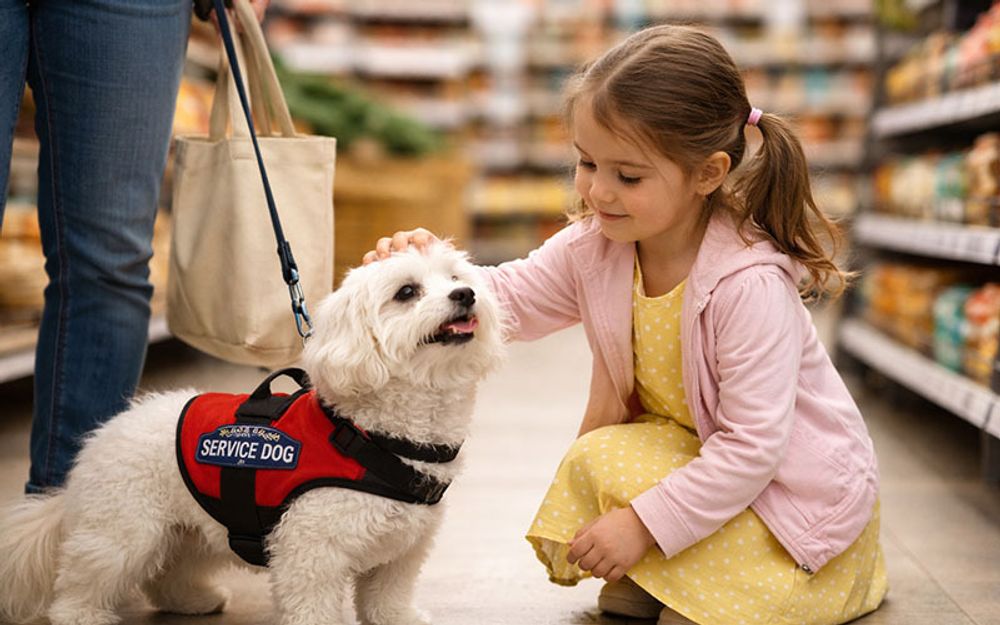
Dealing With the Drive-By Petter
These are the people who just can’t resist petting every dog they see- including your working service dog. While it’s nice to love animals, a distracted dog can escalate into a dangerous situation. Here’s what happens when dogs are unable to pay attention to their handler’s needs.
- A seizure alert dog is unable to alert others when they detect their handler is at risk of a seizure.
- A diabetic alert dog misses a cue about dropped blood sugar, and the handler goes into hypoglycemic shock.
- A psychiatric service dog is unable to provide the grounding work or deep pressure therapy that their owner needs during a crisis.
Script Examples
Handlers can choose a response suited to the situation, based on the petter’s persistence and their own comfort level. Here are some options:
- Polite and Quick:
“Please ignore him, he’s working.” - Educational:
“I know he’s cute, but petting him distracts him from his medical job. Please ignore him.” - The Firm Boundary:
“Do not touch my dog. He is a piece of medical equipment and needs to stay focused.”
De-Escalating Business Confrontations
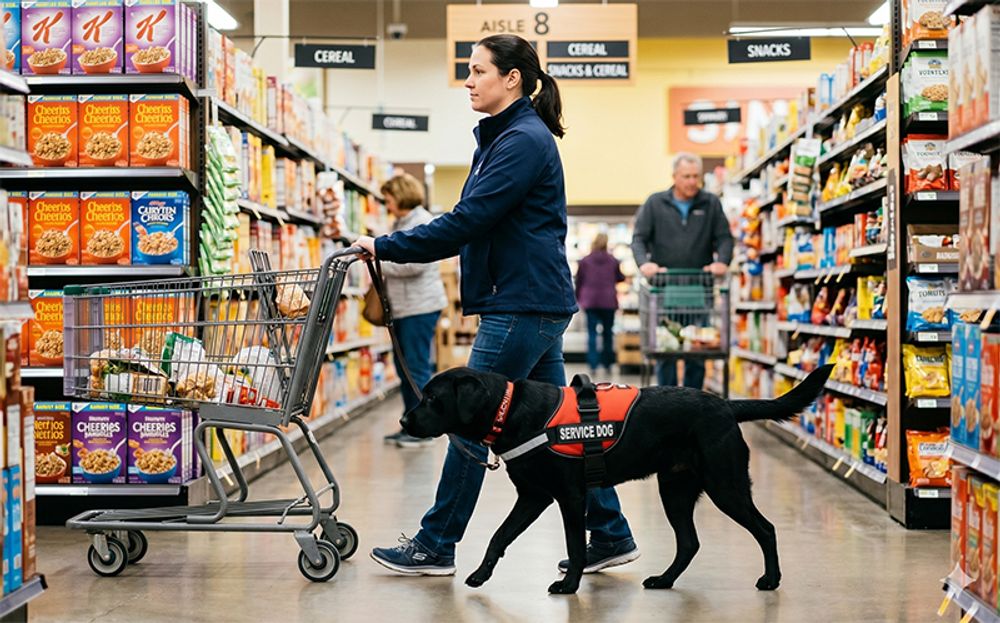
Another common situation- you walk into a store with your service dog, when a store owner, worker, or manager runs up to warn you, “No pets allowed.”
It can get annoying, but it’s best to stay calm and objective rather than get defensive. Approach it as an educational moment. Remember, you catch more flies with sugar than vinegar.
As a service dog owner, you are not required to show a store certification to be on the premises. However, there are two questions a business is legally permitted to ask under the Americans with Disabilities Act (ADA):
- Is this service animal required because of a disability?
- What work or task has this dog been trained to perform?
The best approach is to beat them to the punch. Start with, “He is a trained service dog.” Then answer these questions before they even ask.
The Law Is on Your Side
When a store owner approaches you about leaving their shop, it may seem wrong to stay, but remember, the law is on your side.
According to the ADA, people with disabilities have a right to be accompanied by their service dog in any place that’s open to the public, including hospitals, retail stores, and hotels. This applies whether the facility has a no-pets policy or not.
Under the law, service animals are not pets; they are working animals trained to perform a medical function, and businesses are required to accommodate them.
If a handler’s disability isn’t apparent, store workers are legally permitted to ask the two questions listed above. Everything else is off-limits. Therefore, stores cannot:
- Ask for proof of registration, documentation, and certification
- Require the dog to perform the task on the spot
- Ask you to describe your disability, diagnosis, or why you need the dog beyond asking what task it performs
Stores that impose these requirements are violating the ADA, and you can take action against them.
The "Business Gatekeeper" Script
When an employee or business owner stops you at the door, it usually stems from a lack of training rather than malice. You only need to answer the two legally permitted questions: Is the dog a service animal required because of a disability? and What work or task has the dog been trained to perform?
You do not need to over-explain or disclose your specific diagnosis. Keep it brief, polite, and factual.
What to say:
"Yes, he is a service dog trained to assist with a medical condition. Specifically, he is trained to [insert one task, e.g., alert me to medical changes / retrieve dropped items]. Under the ADA, he is allowed to accompany me here."
By clearly stating the dog's purpose and mentioning the ADA by name, you immediately signal to the employee that you know your rights, which is often enough to end the conversation right there.
What to Do If You Are Denied Access
Even with the law on your side, you may still run into a business owner or employee who refuses to let you and your dog inside. In the heat of the moment, this is incredibly stressful. Having a clear escalation plan can help you stay calm and protect your rights.
If you are denied entry, follow these steps:
Let Your Gear Do the Talking
Even when you know your rights and have your scripts ready, constantly educating strangers and gatekeepers is exhausting. Often, clear visual cues can do the heavy lifting for you, stopping confrontations before you even have to open your mouth.
However, because your dog works hard, wear and tear is inevitable—and a faded vest or scratched tag gives drive-by petters the perfect excuse to say, “I didn’t see that!”
If it's time for an upgrade, USA Service Dogs offers high-quality, durable vests and accessories designed to clearly identify your working partner. Browse our accessories section to set yourself up for more peaceful, hassle-free outings.
At the end of the day, navigating the public as a handler takes patience, but you and your dog are a highly trained team. Stay confident, know your rights, and enjoy your independence together.