
Understanding The True Cost of Care
Once you realize an assistance animal could transform your daily life, the next big question naturally follows: Can I actually afford this? It is a completely natural concern, but financial planning doesn't have to feel overwhelming.
The secret to taking the stress out of budgeting is transparency. When you understand the true costs upfront, anxiety turns into action, allowing you to build a practical plan with complete confidence.
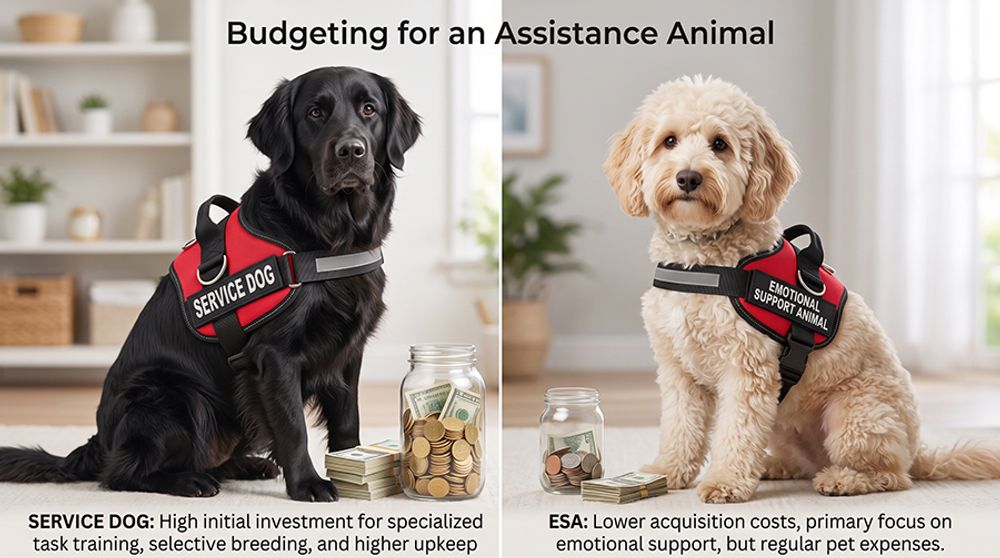
While both Service Dogs and Emotional Support Animals (ESAs) offer life-changing companionship, their financial pathways are quite different. Task-trained Service Dogs require a specialized investment for ADA public access, while ESAs involve a much lower financial commitment focused on housing rights under the Fair Housing Act (FHA). Below, we break down what to expect for both options, where hidden savings exist, and how taxes and insurance can help offset your investment along the way.
Budgeting for a Service Dog: The Working Professional
A Service Dog is not just a companion; they are a highly specialized partner trained to perform specific tasks that mitigate a disability. Because they act as a vital piece of living medical equipment under the ADA, bringing a Service Dog into your life requires a thoughtful financial plan.
-
Acquisition and Training: Purchasing a professionally trained Service Dog is often the most significant expense, typically costing between $15,000 and $30,000 for one to two years of intensive preparation. However, you don't necessarily have to spend tens of thousands of dollars. Under the ADA, owner-training is a completely legal and increasingly popular alternative. While training your dog yourself requires patience, consistency, and a real investment of your time, it is highly achievable, especially for specific, straightforward tasks. Many handlers find that self-training not only drastically lowers upfront costs but also deepens the incredible bond they share with their working partner.
-
Specialized Gear: To ensure safe and confident public access, you will need high-quality working gear. This includes clearly marked vests, custom mobility harnesses, ID kits, and specialized leashes.
-
Premium Veterinary Care: A working dog must remain in peak physical condition to perform their duties safely. Handlers often invest in higher-tier preventative care, joint supplements, and specialized diets to keep their partner healthy and active.
While it is a major financial commitment, it is a profound investment in your personal independence and daily freedom.
Budgeting for an Emotional Support Animal: The Cost of Comfort
An Emotional Support Animal provides profound daily comfort and companionship. Because ESAs do not require the rigorous, specialized task training mandated for Service Dogs, the financial commitment is much more accessible and closely mirrors standard pet ownership.
-
Acquisition: Bringing an ESA home is often very affordable. Standard adoption fees from a local shelter typically range from $100 to $500, though purchasing a specific breed directly from a breeder will cost more.
-
The ESA Letter: To secure your legal housing rights under the Fair Housing Act (FHA), you need an ESA letter from a licensed mental health professional. Booking sessions directly with an outside therapist can sometimes require up to three separate appointments, easily pushing costs up to $600 or more. By using a streamlined ESA evaluation service like USA Service Dogs, you can connect directly with a therapist licensed in your state for a simple, flat fee, typically between $150 and $200 with no hidden surprises.
-
Standard Maintenance: Just like any beloved pet, an ESA requires a budget for standard care. This includes basic obedience training, routine veterinary checkups, high-quality food, and standard supplies like beds, toys, and leashes.
For individuals seeking daily emotional comfort and companionship at home, an ESA offers life-changing benefits at a highly accessible cost.
The Hidden Savings: Where Official Status Pays Off
Obtaining proper legal status for your animal is about more than just exercising your rights, it is also a smart financial move that actively protects your wallet over your partner's lifetime.
-
Housing Exemptions (FHA): Under the Fair Housing Act (FHA), housing providers are legally required to accommodate assistance animals. Landlords cannot charge pet deposits, monthly pet rent, or upfront pet fees for legally documented Service Dogs or Emotional Support Animals. Saving even $50 a month in pet rent adds up to thousands of dollars in real savings over your dog's lifetime.
-
Travel and Public Access (Service Dogs): Task-trained Service Dogs travel in the cabin of commercial aircraft at no extra cost under the Air Carrier Access Act (ACAA). Additionally, they are exempt from standard pet fees at hotels, resorts, and vacation rentals.
Taking the proper steps to document your animal ensures you won't face unnecessary pet fees, allowing you to focus your budget on what really matters. your shared health and happiness.
Navigating Health Insurance: Managing Expectations
When budgeting for an assistance animal, it is helpful to know where traditional healthcare coverage stands:
-
Standard Health Insurance: Standard health insurance programs—including Medicare and Medicaid—do not cover the cost of acquiring, training, or maintaining a Service Dog or ESA, as assistance animals are not classified as durable medical equipment under most policies.
-
Pet Insurance: Obtaining a pet insurance policy (typically $30 to $60 per month) is one of the smartest ways to protect your overall investment. It provides peace of mind by softening unexpected emergency veterinary fees for both Service Dogs and ESAs.
-
Grants and Non-Profits: For eligible handlers, various non-profit organizations and grants exist to help offset the costs of acquiring a task-trained Service Dog. Exploring these funding options before ruling out a Service Dog on price alone is always a great step.
Tax Deductions: The IRS and Your Animal
When tax season rolls around, having a task-trained Service Dog can offer significant financial relief:
-
Service Dogs (IRS Publication 502): The IRS classifies expenses directly related to buying, training, and maintaining a task-trained Service Dog (including food, veterinary care, and specialized gear) as deductible medical expenses under Schedule A. As long as your total qualifying medical expenses exceed 7.5% of your Adjusted Gross Income (AGI), these costs can help lower your taxable income.
-
Emotional Support Animals: The IRS generally treats ESAs as companion pets, so standard maintenance expenses are typically not tax-deductible. However, in rare instances where a physician strictly prescribes an animal as a required medical treatment, some expenses may qualify.
(Note: Tax situations vary based on individual circumstances, so it is always best to consult with a CPA or tax professional when filing.)
Take the Next Step Toward Your Independence
Understanding the true cost of care takes the uncertainty out of budgeting, transforming financial worries into a clear, actionable plan. Whether you are seeking the comforting companionship of an Emotional Support Animal or the life-changing independence of a task-trained Service Dog, your decision is a meaningful investment in a freer, more confident future.
At USA Service Dogs, we believe that price transparency and ongoing guidance are essential to protecting that investment. Every step of the way, our 24/7 customer support team is available around the clock to answer your questions, help you navigate guidelines, and assist with any housing or public access questions that arise while you are out and about.
Protect Your Housing Rights with an ESA Evaluation & Gear
If you are seeking daily emotional comfort at home without the burden of extra landlord fees or pet deposits, securing proper documentation from a licensed healthcare provider is your essential first step:
-
Get Evaluated by a Licensed Therapist: Skip expensive, multi-session therapy visits. With our ESA Letter Evaluation Service, we connect you directly with a mental health professional licensed in your state for a simple, flat-fee consultation—typically just $150 to $200—to establish your housing documentation under the Fair Housing Act.
-
Identify Your ESA for Smooth Interactions: Complement your letter with an Emotional Support Dog Registration Kit. High-visibility vests, custom identification cards, and certificates clearly communicate your animal's status to housing providers and neighbors, helping establish clear expectations and prevent misunderstandings.
Equip Your Service Dog Team for Seamless Access
If you rely on a task-trained partner to manage a disability, having clear, recognizable identification makes navigating daily public spaces significantly easier:
-
Clearly Identify Your Working Partner: While the ADA protects your access rights based on your dog's task training rather than mandatory gear, outfitting your dog with a custom Service Dog Registration ID Kit acts as an instant visual signal. Clearly marked vests and handler IDs signal to business owners and staff that your dog is on duty, cutting down on unwanted distractions and awkward questions.
There is no price tag on freedom, joy, and peace of mind. Plan your budget, choose the path that fits your life, and step out into the world with the support and confidence you deserve!