Be Ready Before Disaster Strikes: Emergency Prep for Service Dogs & ESAs
Emergencies, from wildfires and hurricanes to house fires and medical crises, happen when you least expect them, and the first few minutes count. While service dogs and emotional support animals support us through daily life, they depend entirely on us to keep them safe in a disaster.
Preparing your evacuation strategy in advance removes panic from the equation and protects your partner when time is short. At USA Service Dogs, we recommend every handler create a comprehensive disaster plan. Here are the essential steps to protect your service dog or emotional support animal during an emergency.
Build a "Canine Bug-Out Bag"
Keep a specific emergency kit nearby and go through it every 6 months to replace any expired materials or damaged equipment. Your emergency kit should include:
● A seven-day supply of food and water: Keep your food in moisture-resistant packaging and stock ample bottled water with bowls that can fold.
● Medical essentials: Include at least two weeks' worth of your dog's (and your own) daily medications, plus a pet first-aid kit with items like gauze, bandages, antiseptic wipes, and tweezers.
● Protective gear: Some dog shoes can keep your service dog safe from shards of glass, sharp objects, floods, and scorching pavement. Depending on the season, have a raincoat or cooling jacket.
● Backup equipment: Have an extra leash, collar, ID tags, harness, and dog vest. If your primary gear is lost or damaged during an evacuation, you'll still have everything needed to keep your dog working safely.
Having the essentials prepared earlier on lets you care for your dog during the emergency rather than look for food and supplies.
Keep Important Documents Together
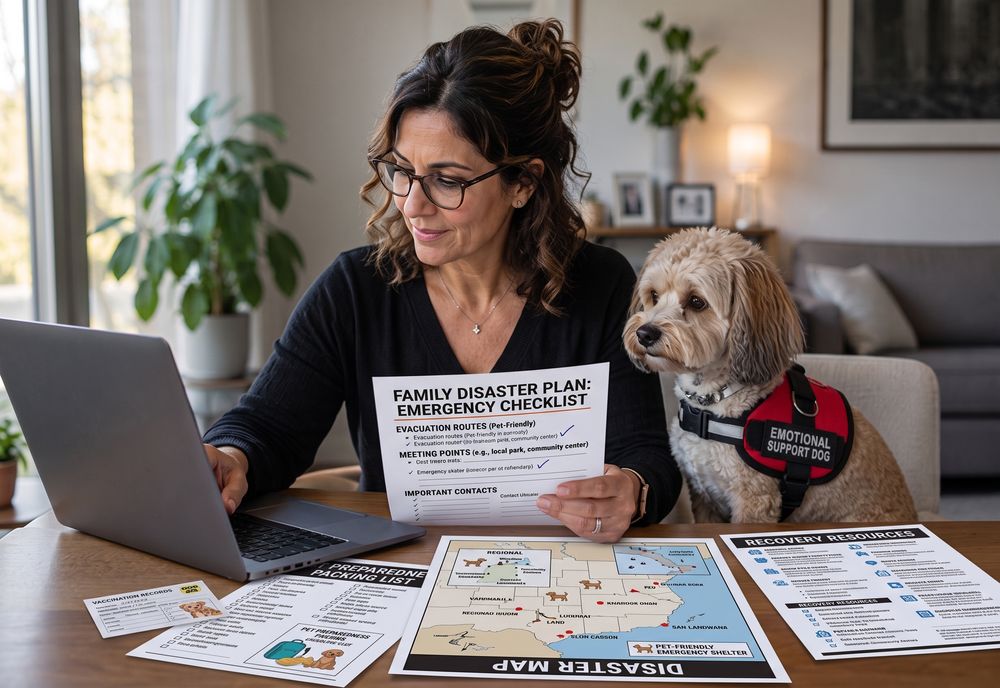
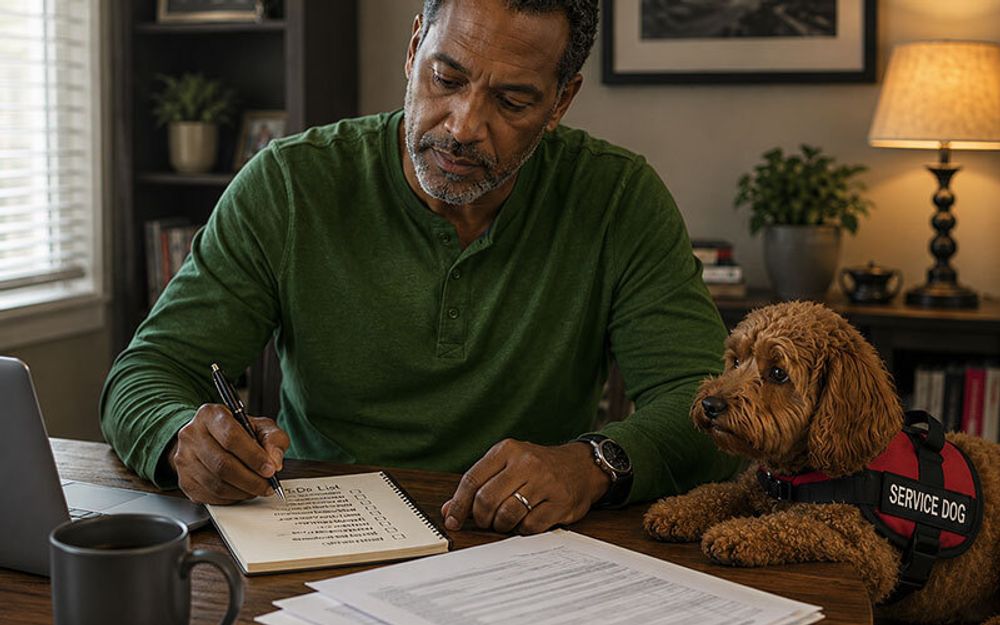
Power outages and damaged cell towers can make digital records difficult to access. That's why we recommend keeping printed copies of important documents inside a waterproof folder in your emergency kit.
The records of your service dog’s immunizations must be included in the folder, and you particularly need to remember the rabies immunization record along with your veterinarian’s contact details. It is also smart to keep pictures of your service dog to prove ownership in the event of any separation.
We also recommend carrying a printed copy of the ADA Service Animal regulations in the emergency kit. In large-scale emergency situations, staff or emergency workers may not be familiar with the laws related to service animals and will have issues dealing with this information.
Know Your Rights at Emergency Shelters
Knowing your rights and options ahead of time will help eliminate confusion during a high-stress evacuation.
Service Dogs
Under the Americans with Disabilities Act (ADA), public emergency shelters must allow service dogs to stay with you in general housing areas. They are not pets, so staff cannot separate you or restrict your dog to pet-only areas.
Emotional Support Dogs & Pets
While ESAs do not have public access rights under the ADA, handlers are protected by the Pets Evacuation and Transportation Standards (PETS) Act of 2006. This federal law requires state and local emergency management plans receiving FEMA assistance to accommodate household pets and assistance animals.
- Local plans must offer pet-friendly shelters, co-located animal housing, or alternative care facilities.
- While ESAs may not be allowed in general human sleeping quarters, officials must provide viable options to keep your animal safe.
Evacuation Checklist
- Find Local Facilities: Locate designated pet-friendly shelters before disaster season.
- Store Health Records: Keep rabies and core vaccination records ready, as pet-friendly shelters require them for entry.
Create an Incapacitation Plan
A critical but often overlooked part of disaster prep is planning for what happens if you are injured, unconscious, or unable to care for your assistance dog during a crisis.
-
Carry ICE (In Case of Emergency) Cards: Place one ICE card in your wallet and attach a duplicate directly to your dog’s vest or harness. Clearly state that your dog is a working animal and list the name and phone number of your designated emergency contact.
-
Designate a Backup Handler: Choose a trusted friend or family member who can step in to care for your dog. Make sure they are familiar with your dog’s commands, daily routine, feeding schedule, medications, and any special behaviors.
-
Provide Home Access: Give your designated contact a spare key to your home so they can safely retrieve your dog or gather extra supplies if you are hospitalized or detained.
-
Keep It Updated: Don't let your plan sit in a drawer forgotten. Review contact details, medical info, and routines once or twice a year so everyone knows what to do if an emergency strikes.
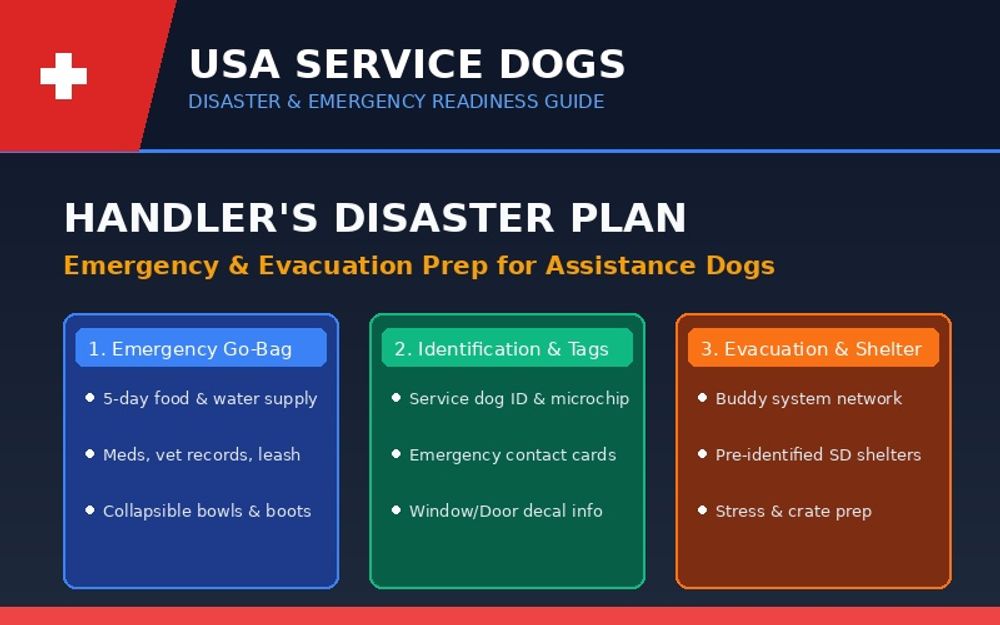
Be Ready Before You Need To
During a crisis, first responders and shelter staff must make split-second decisions. They won't have time to sort through confusing situations, so clear preparation and quick visual cues make all the difference.
Preparing in advance protects your assistance animal on every level:
-
Emergency Kits: Keep your animal fully supplied with food, water, gear, and a 14-day supply of medications.
-
Document Readiness: Stash printed vaccination records, vet contact info, and legal guidelines in a waterproof pouch to avoid unnecessary delays at shelters.
-
Incapacitation Backup: Establish a trusted emergency contact who can step in if you are medically unable to care for your animal.
Clear Identification Speeds Up Response
While the ADA does not legally require service dogs to wear specific gear or register with an agency, clear identification is invaluable during a high-stress evacuation. A visible vest, leash wrap, or ID card pouch immediately signals to paramedics, firefighters, and shelter staff that your animal is a working companion or support animal—not a loose pet. That simple visual cue helps prevent separations when every second counts.
Gear Up for the Unexpected
A little extra organization goes a long way during an evacuation. You can keep your dog’s essentials secure and easily identifiable with these key tools:
-
Our Heavy Duty Service Dog or Emotional Support Dog Vests offers high-visibility identification built for rugged conditions.
-
The ID Card Holder Pouch keeps your animal's essential paperwork, medical logs, and emergency contact details dry, organized, and ready to present at a moment's notice.
-
If you choose to register your dog with us, having their digital and physical ID profile packed in your bug-out bag adds an extra layer of organized documentation when you need it most.
Taking a few simple steps right now gives you peace of mind down the road. Prepare for the unexpected today so you and your dog can navigate any emergency safely and confidently.