Navigating Airbnb Rules for Service Dogs and ESAs
Booking a short-term rental can feel like surfing a murky legal gray area. While the Americans with Disabilities Act (ADA) explicitly covers conventional hotels, short-term rentals operate under a different framework. Because Airbnb hosts are individual property owners, traveling with an assistance animal can sometimes lead to unnecessary disputes or confusion.
The truth is, although Airbnb enforces a strict accessibility policy across its platform, the rules for Emotional Support Animals (ESAs) differ significantly from those for Service Dogs. This guide breaks down your legal rights, fee exemptions, and practical communication strategies for a seamless stay.
The Big Divide: Service Dogs vs. ESAs on Airbnb
To avoid surprises at check-in, you need to understand how Airbnb defines the difference between Service Dogs and Emotional Support Animals:
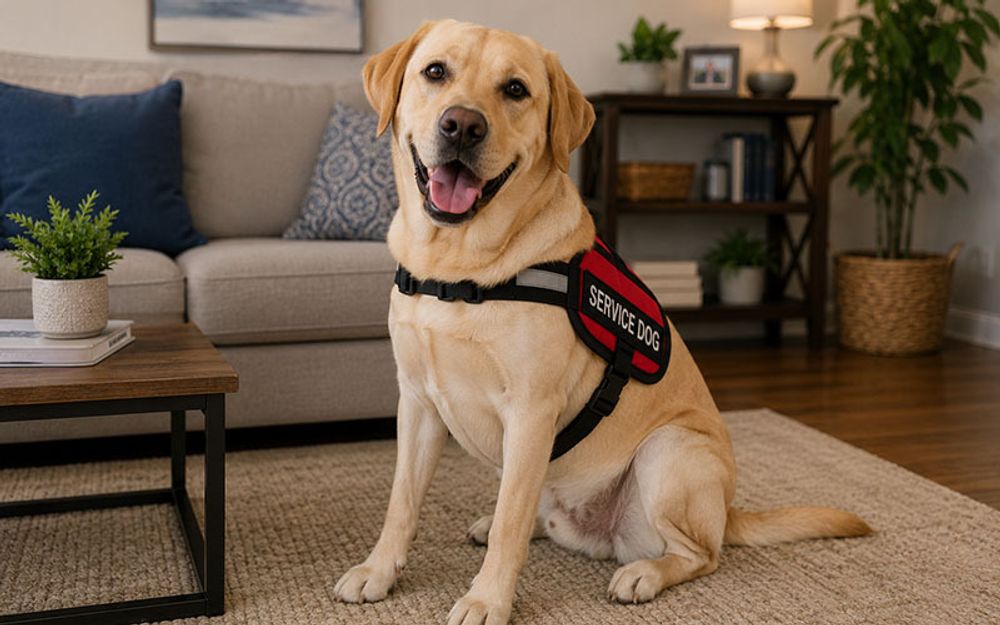
- Service Dogs: Fully covered by Airbnb’s Accessibility Policy (paralleling federal ADA requirements), Service Dogs are individually trained to do tasks for people with disabilities. Airbnb considers them assistance animals; therefore, these dogs will never be treated as pets.
- Emotional Support Animals (ESAs): Under Airbnb's global policy update, hosts are not required to accommodate ESAs, and they may charge standard pet fees or enforce a "no pets" policy.
Housing Law vs. Short-Term Rentals: While long-term rentals fall under laws like the Fair Housing Act (FHA)—which strictly protects ESAs—short-term vacation rentals operate under different rules. Federal law does not mandate ESA accommodations in short-term lodging.
Platform Regional Exceptions: Airbnb's policy currently includes specific regional exceptions for bookings in California, New York, Ontario, and Quebec. In these specific jurisdictions, Airbnb's terms require hosts to accommodate ESAs without pet fees. Outside these regions, hosts have full discretion to accept or decline ESAs.
Your Rights When Traveling with a Service Dog
If you travel with a professionally trained Service Dog, Airbnb provides strong protection against unfair treatment and unexpected costs:
Zero Pet Fees
Hosts are strictly prohibited from charging pet fees, animal deposits, or even extra surcharges for hair or dander.
No Blanket Denials
A host can’t refuse your booking just because you own a service dog, even if the listing says “no pets”. The only rare exception happens if the host shares a living space and holds an officially granted Airbnb exemption due to severe medical allergies or safety hazards.
The "Two Questions" Rule
While private short-term rentals are generally exempt from federal ADA laws (which cover traditional hotels), Airbnb enforces these same rules platform-wide. Under Airbnb policy, hosts cannot demand medical records, doctor notes, or skill demonstrations.
They are only permitted to ask two questions:
- Question 1: Do you require the animal because of a disability?
- Question 2: What work or task has the animal been trained to perform?
Tip: When communicating with a hesitant host, cite Airbnb’s Accessibility Policy rather than federal ADA law, as Airbnb's platform terms apply directly to all host listings.
Handler Responsibilities
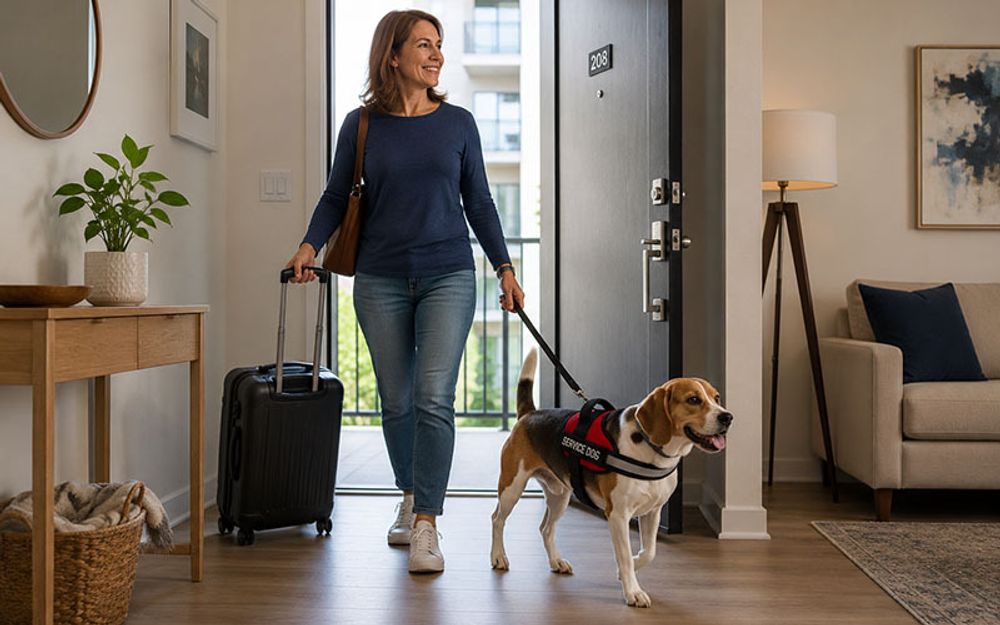
Protection comes with responsibility. Service Animals must remain housebroken, well-behaved, and under your control at all times. Crucially, Service Dogs cannot be left unattended in an Airbnb rental without explicit prior approval from the host.
Navigating Airbnbs with an Emotional Support Animal (ESA)
With the increase in the strictness of regulations related to ESAs, it’s important to have a good booking plan:
● Be Prepared for Additional Fees: Apart from the safe havens of New York and California, account for the additional fees for pets or a deposit for cleaning.
● Use "Pets Allowed": On the Airbnb site, use the "Pets Allowed" option in the search filters so that you can find the hosts who accept pets.
● The Importance of Asking: Contact the host prior to making the reservation. Many independent hosts tend to be sympathetic towards you and your animal if you talk to them beforehand.
The Etiquette of Disclosing Your Animal
Stress can happen to the handlers unnecessarily due to uncertainty about when they need to reveal the information related to the host. The knowledge of the right etiquette in terms of information disclosure guarantees there is no conflict at the check-in stage.
According to the Airbnb policy, the Service Animal does not have to be disclosed before clicking on the Book button. The disclosure of the information after booking but before arrival is clear enough. You can use the following template:
"Hi [Host Name], I am looking forward to our upcoming stay! I just wanted to give you an advance courtesy notification that I will be bringing my Service Dog with me, who helps me with my disability. They are house-trained, well-behaved and will be under my control all the time."
What to Do if a Host Pushes Back
If a host attempts to cancel your reservation or attach an illegal pet fee for a Service Dog, you need to follow these 2 steps:
- Step 1: Educate First: Most policy violations stem from host ignorance rather than malice. Politely send the host a link to Airbnb's official Accessibility Policy and Nondiscrimination Policy to clarify their host obligations.
- Step 2: Escalate to Airbnb Support: If a host remains uncooperative or insists on extra fees, contact Airbnb Support immediately. Airbnb takes disability discrimination seriously and will step in to educate the host, waive improper charges, or rebook your stay.
Traveling with Confidence
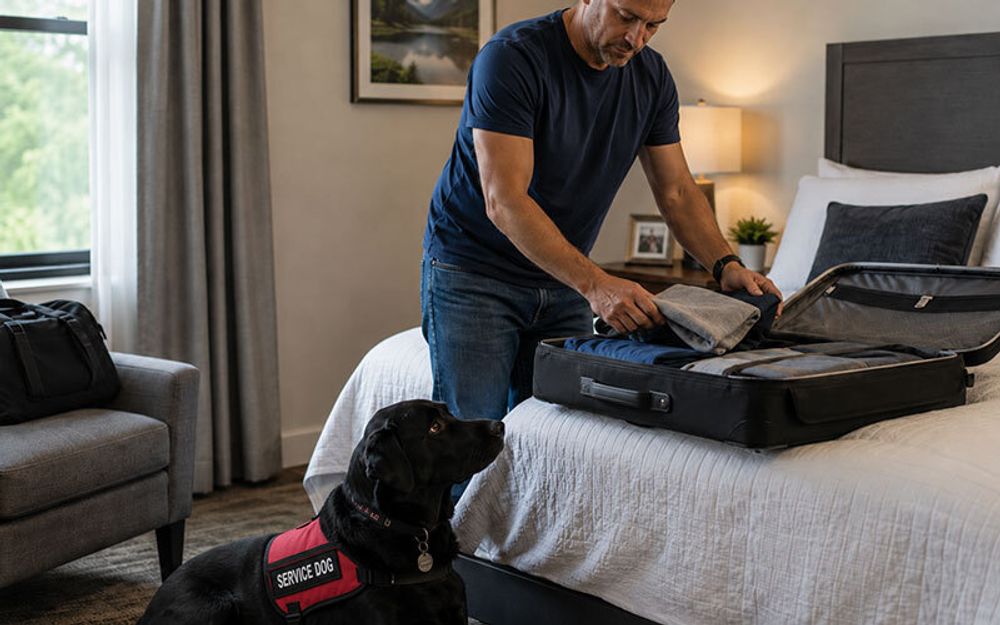
Traveling with a Service Dog or Emotional Support Animal doesn't have to be stressful. Knowing your platform rights and communicating clearly with your host are the most effective ways to prevent unfair pet fees or booking misunderstandings.
Visual Clarity & Courtesy
Identification Under federal law and Airbnb platform policy, handlers are never legally required to purchase registration, official credentials, or special equipment to prove their animal's status. However, many working handlers find that outfitting their dog in a clear Service Dog Vest or carrying a Service Dog ID Card serves as a helpful visual cue. A recognizable "uniform" immediately signals to hosts and neighbors that your animal is working, helping set a professional tone and reducing unnecessary questions at check-in.
Maintaining Valid ESA Documentation
If you are traveling with an Emotional Support Animal in a region where ESA accommodations are accepted (such as California or New York), hosts and landlords may ask for standard supporting documentation. Ensure your provider documentation remains current—if your paperwork is approaching its expiration, you can conveniently complete an ESA Letter Renewal through a licensed healthcare professional to keep your records up to date.
Shop Service Dog Vests & Visual ID Gear | Renew Your ESA Assessment Letter